Design and architecture · Mara Keating · 6 min read
Architect or design-and-construct in Queensland
Who should lead a custom home when the climate is tropical, the overlays are fussy, and the old Cairns studio model — designer, architect, builder in one breath — still tempts owners.
Published 15 April 2024 · Updated 9 February 2026
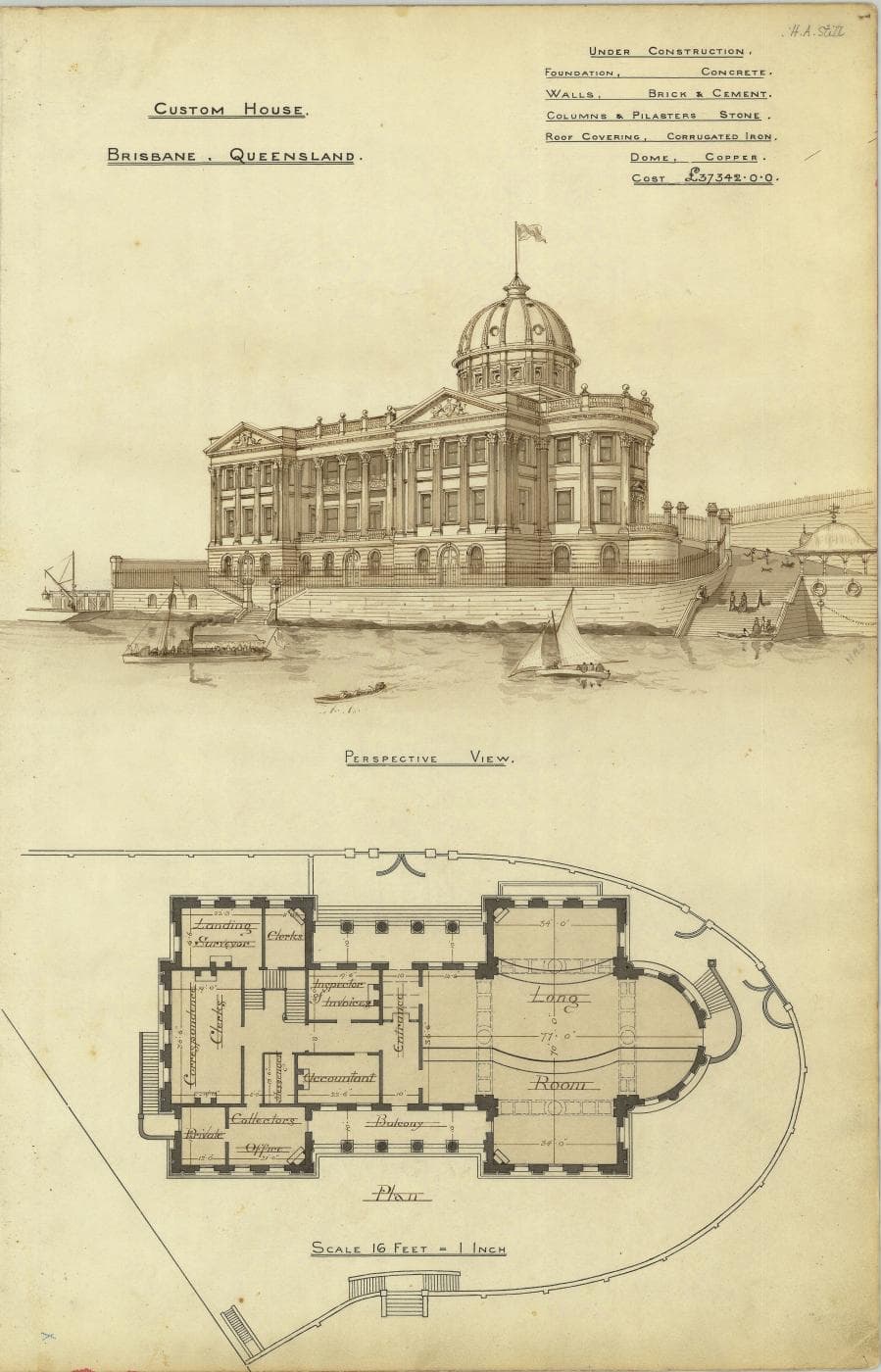
Photo: Queensland State Archives · CC BY 4.0 · Source · Image credits

The archived Custom Homes QLD homepage called the practice a designer, architect and builder in one line. That is the promise every design-and-construct firm still makes: one throat to choke, one aesthetic, fewer gaps between the sketch and the slab. Sometimes it is true. Sometimes it is how an owner loses the house they thought they had bought.
Queensland adds weather, overlays and a licensing regime that punishes casual arrangements. The choice is not “art versus commerce”. It is about who holds the pen when the soil report lands and the budget moves.
Three common ways to buy design
Independent architect or building designer, then tender. You pay for thinking before you pay for concrete. You can test the market. You own a set of documents a second builder can price. This is slower at the front and usually calmer later. It suits sloping, flood, BAL or cyclone sites where the first idea should not be the builder’s standard plate.
Design and construct. One entity designs to a price. Speed and cost control can be real. The risk is that design decisions become purchasing decisions without you noticing. It suits a straightforward lot and an owner who can write a brief.
Hybrid / novation. An independent designer takes the project to a point, then the builder takes the documents over. This can combine brains and delivery. It fails when nobody is clearly responsible for a wet-area detail that leaks.
The old timber catalogue — Aspen through Teak — was a D&C-friendly idea: a named starting point, then customisation. That still works if the starting point is honest about climate. It does not work if the name is a sticker on a Sydney plan. See the timber catalogue and From Aspen to Teak.
What architects and designers are actually for
A good lead designer will spend your money on the problems you cannot see in a display home: overland flow, a neighbour’s overshadowing, a roof that can be cleaned, a plan that works when two teenagers and a parent work from home. They will tell you when the verandah is too thin. They will not automatically make the house more expensive; they will make the expense visible.
In Queensland you also want someone who has built here, not just photographed here. Cyclone tie-downs, termite systems, and wet-season sequencing are not optional culture. Ask for two completed houses in a climate like yours, and walk them.
What builders are actually for
A good custom builder will tell you what the drawing will cost in this labour market, which trades are booked, and which details will fail. They should hold the right QBCC licence and be willing to work inside a proper building contract.
A builder who designs as a free extra is not free. You are paying in standard details. That can be fine. It is not fine on a 1:5 slope above a creek.
How to keep a D&C job from going bland
Write a brief that names rooms, orientations, shade, screening, and the finishes you will not trade. Attach a budget that includes landscaping, driveways, holding costs and a contingency — the cost guide lists the lines owners forget.
Pay for an independent design review at two moments: sketch, and before the contract is signed. A day’s architect fee has saved more kitchens than it has cost.
Keep a schedule of substitutions. If the specified window becomes “or equivalent”, write down who judges equivalence. In a cyclone region, equivalent is a structural word.
Licensing and who may do what
Designers, architects and builders are different registers. Do not let a glossy capability statement replace a licence check. If the person leading design is also building, you still need the contract to say who is liable for design errors. QBCC home warranty insurance has edges; read that essay before you pay a deposit.
Council and the private certifier do not care about your procurement romance. They care that the documents meet the scheme and the National Construction Code. Approvals sit beside this choice, not after it.
A practical way to decide this month
If the site is easy, the brief is modest, and you have seen two of the builder’s houses you would live in, D&C can be a clean path. If the site is a character suburb, a BAL-40 ridge, a flood overlay, or a family argument about a second living room, buy independent design first.
Questions that sort a studio in twenty minutes
Ask who will attend site in the wet season, not only who presents the sketch. Ask how many current jobs share the same supervisor. Ask for the last three variation registers, redacted if they must be, so you can see whether “custom” meant “undefined”. Ask who owns the drawings if you part company at week twelve. Ask whether the energy assessor and the engineer have already worked with this envelope, or whether you are paying for a first date.
Ask how they treat a soil report that ruins the first idea. A good lead designer looks pleased: the site has spoken. A poor one starts talking about how the neighbour “got away with it”.
Ask for a program that names council, certification, procurement and the roof-on date as separate events. If the answer is “sixteen weeks, easy”, you are being sold a television renovation.
How the old Cairns model still misleads
Designer-architect-builder in one breath is attractive in a city where the trade bench is thin. It can work when the same people have already built two houses like yours and the contract still allows an independent inspection. It fails when the display-home smile is doing the work of a specification.
The timber catalogue was a D&C device: start with a name, then customise. That is legitimate if the name encodes climate. It is a trap if the name is only a feeling. Keep From Aspen to Teak next to the capability statement.
Owners who come from interstate often hire the first person who understands their accent. Hire the person who understands the overlay. The Far North, the character suburbs and the hinterland ridges are not interchangeable portfolios.
Money, time and the quiet third option
There is a third way that rarely gets a brochure: pay an independent designer through schematic design, then invite two licensed builders to price a defined package, then either tender or novate. You spend more in fees and usually less in regret. The cost guide is the place to park those fees so they do not feel like a theft from the kitchen.
If you cannot afford independent design and the site is hard, the honest conclusion may be that the lot is wrong, not that a free sketch will save you.
The Far North practice that once occupied this domain succeeded, owners said, because it went “the extra step the project builders won’t”. That step is usually time spent on design before the earthworks. Hire it explicitly, whether the invoice says architect, designer or builder.
If the site is hard, buy independent design before a free sketch. If the site is easy and you have walked two of the builder’s houses, design-and-construct can be clean — with a brief, a review and a contract that names substitutions. The extra step the old Cairns copy promised is time on paper before earthworks, whoever sends the invoice.
Frequently asked questions
- Is an architect legally required for a custom house in Queensland?
- No. Many excellent houses are led by licensed building designers. An architect is worth it when the site, overlay or ambition is complicated enough that design time will save construction time.
- Does design-and-construct mean I lose control?
- Only if the brief and the contract are vague. A tight performance brief, a schedule of finishes and a right to independent advice keep a D&C job honest.
- Can I start with a designer and novate to a builder?
- Yes, and it is common. Get the novation terms read by someone who is not the builder. Ownership of the drawings and liability for changes must be written down.