Building and contracts · Priya Chandran · 5 min read
A custom home cost guide for Queensland
What owners should budget beyond the builder’s headline number — land, extras, climate detailing, and the lines that blow a Cairns or Brisbane custom job.
Published 1 July 2024 · Updated 8 June 2026
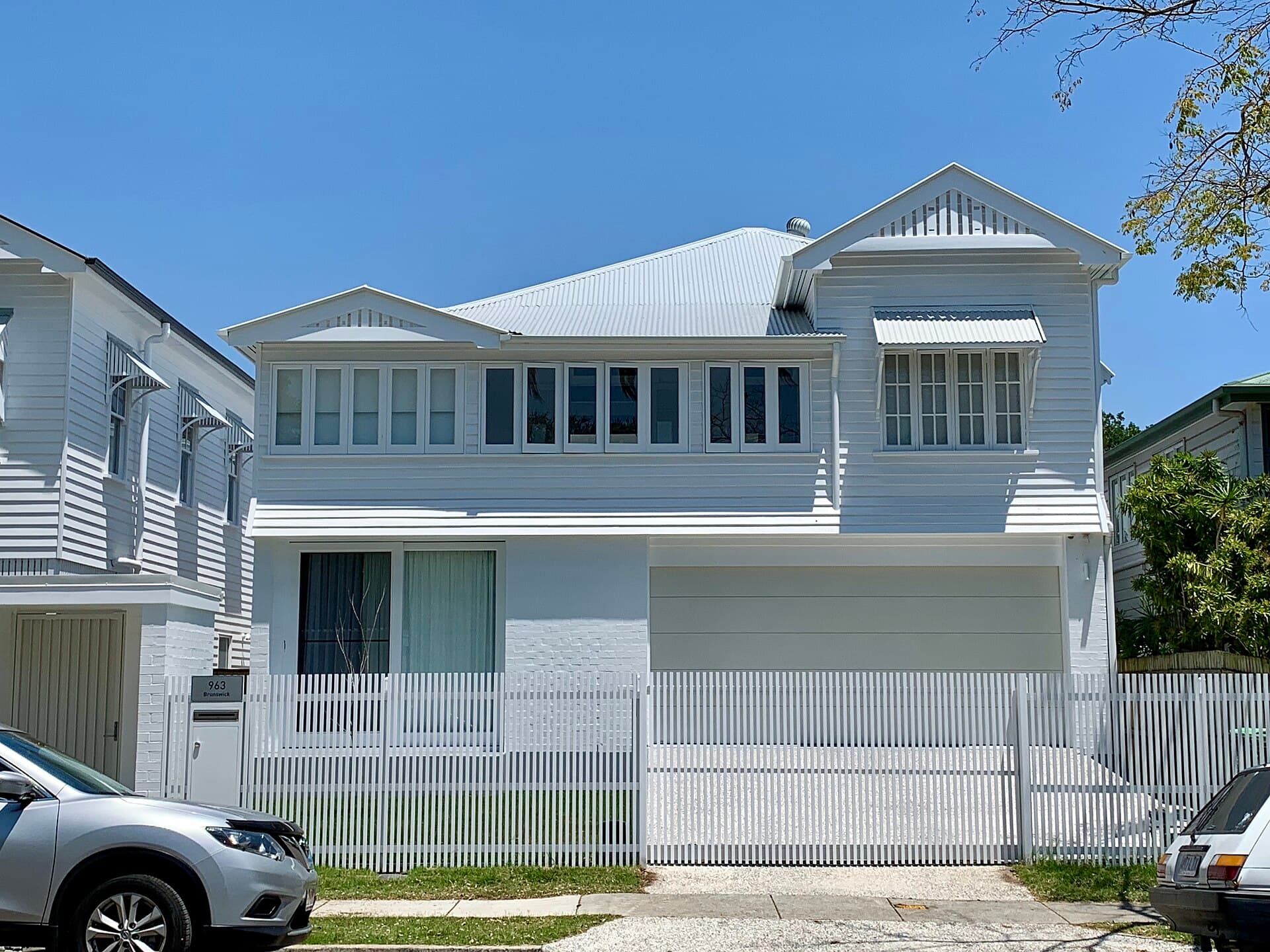
Photo: Kgbo · CC BY-SA 4.0 · Source · Image credits

People ask what a custom house costs in Queensland as if the state were a single aisle. It is not. A high-set in Caravonica, a small-lot house in New Farm, a hinterland slab at Tamborine and a canal house on the Gold Coast share a language and not a price list. This guide is a map of the lines, not a quote.
Figures move with labour, timber, steel, fuel and the mood of insurers. Treat every number you hear at a barbecue as a story from another year. Check current trade pricing before you commit. The point is to stop being surprised by categories.
The headline is not the house
A builder’s rate is usually the building contract works as defined. It may exclude demolition, retaining, driveways, fences, landscaping, pools, window coverings, air-conditioning, appliances, connections, and the extra engineering a soil report is about to demand. Ask for a inclusions list that is boring and long.
Then add the professionals: designer or architect, engineer, energy assessor, certifier, surveyor, geotech, sometimes a town planner. Add council fees. Add the temporary life: rent, storage, interest. Add GST if anyone has been charmingly exclusive of it.
The contract essay explains allowances. Allowances are where a headline stays pretty.
Site and climate extras that are not extras
Ground. Reactive clay, rock, fill, acid sulfate, a high water table. Foundations is the technical pair.
Contour. Retaining and long driveways eat budgets in the hinterland and on Brisbane ridges. Sloping blocks.
Water. Flood levels, tanks, stormwater quality, oversized gutters. Flood and tanks.
Wind. Coastal and Far North cyclone detailing is structure, fabric and time. Cyclone homes.
Fire. BAL windows and decks. Bushfire.
Energy. Glazing and insulation to hit a rating, plus the solar everyone assumes is free. NatHERS.
None of these are “nice to haves” on the lots that need them. They are the house.
Finish level is a second house
Two houses can share a plan and diverge by hundreds of thousands in stone, timber, joinery and imported fittings. Decide a finish story early. The old timber names — Ironbark versus Aspen — were a crude version of this. Use them as a conversation, then specify. From Aspen to Teak.
Kitchens and bathrooms are the usual explosion. Read wet areas before you spend the contingency on a tap.
Pools are a third house. Outdoor living.
Regional labour and the calendar
Cairns, Townsville, Mackay and the west do not have Brisbane’s depth of every trade. Freight is real. A wet season is a calendar. The old testimonial that praised a team for building through rain and cyclones was also admitting those things cost time. Time is rent.
South-east Queensland has more trades and more competition for them. A custom job can still sit behind apartment work and insurance rebuilds. Ask for a program that names lead times, not only a start rumour.
A budget structure you can defend
Write four columns: land and holding; professionals and approvals; building contract; owner-supplied and landscape. Put a contingency under each, not one magic lump. Review the columns when the soil report arrives, when the energy report arrives, and when you choose the kitchen.
If a salesperson gives you a single square-metre number and a handshake, you are not in a custom process. You are in a brochure.
Worked categories, not a fake quote
Owners keep asking for a number. Here is a way to think without pretending it is a tender. Land and holding can equal or exceed the building contract in inner Brisbane and do the opposite in regional towns. Professionals and approvals often land as a mid-five-figure to low-six-figure band on a true custom job once planner, engineer, energy and certifier are honest. The building contract is the line everyone quotes and the line that excludes the driveway. Owner-supplied kitchens, blinds, air-conditioning, landscapes and pools are a second contract pretending to be shopping.
None of those bands is a promise. They are a warning about structure. If your spreadsheet has one line called “house”, start again.
What blows first in each climate
Far North: wet-season time, rated openings, freight, screens. South-east ridges: retaining and BAL glass. Flood lots: floor level and a driveway that still works. Fashionable coasts: stone and a glass wall that the engineer then has to hold down.
Write the climate extra as a line you will not steal from the contingency. Then the contingency can do its actual job: the rock, the hidden pipe, the week the windows missed the boat.
The Far North studio that once used this masthead sold individuality. Individuality has a cost. The owners who stay friends with their house are the ones who met that cost on paper first.
Holding costs and the year the house is not finished
Rent, storage, extra interest and a delayed sale of the old place are part of the custom price. A wet season that eats six weeks is not only a builder problem. It is a household cashflow problem. Write a date you can miss without panic.
If you cannot miss it — a school year, a visa, a lease — you may not be in a custom-home year. That is an adult conclusion, not a failure of taste.
A note on GST, deposits and the pretty exclusion list
Read whether prices are inclusive. Read the deposit against the law and the contract. Read the exclusion list aloud. If blinds, fences and air-conditioning are excluded, you do not yet know the number. You know a chapter heading.
Build four columns — land, professionals, contract, owner-supplied — and put a contingency under each. Then add the climate extra your lot actually has: wind, flood, BAL, clay or freight. A single square-metre number is a brochure. A custom house in Queensland is a ledger you update when the soil report lands, when the windows are priced, and when the wet season moves the calendar under your rent.
That is the brief. Keep it.
Write the four columns before you shop for taps.
Frequently asked questions
- Why do online square-metre rates feel like a lie?
- Because they omit land, connections, driveways, retaining, professional fees, holding costs and the finish level in the photograph. They also ignore cyclone, BAL and flood extras.
- What contingency should I keep?
- Many owners are underdone at 5 per cent on a true custom job. Talk in ranges: site risk, finish risk, and life risk if the program slips.
- Is Far North Queensland more expensive than Brisbane?
- Often, once you count freight, labour depth, wet-season downtime and wind detailing. A cheaper headline rate can hide a longer calendar.