Planning and approvals · James Nguyen · 5 min read
Bushfire attack levels for Queensland custom homes
BAL is not a hinterland fashion. How a rating is set, what it does to decks and windows, and why a pretty timber underside can be the most expensive idea on a ridge.
Published 8 April 2024 · Updated 30 March 2026
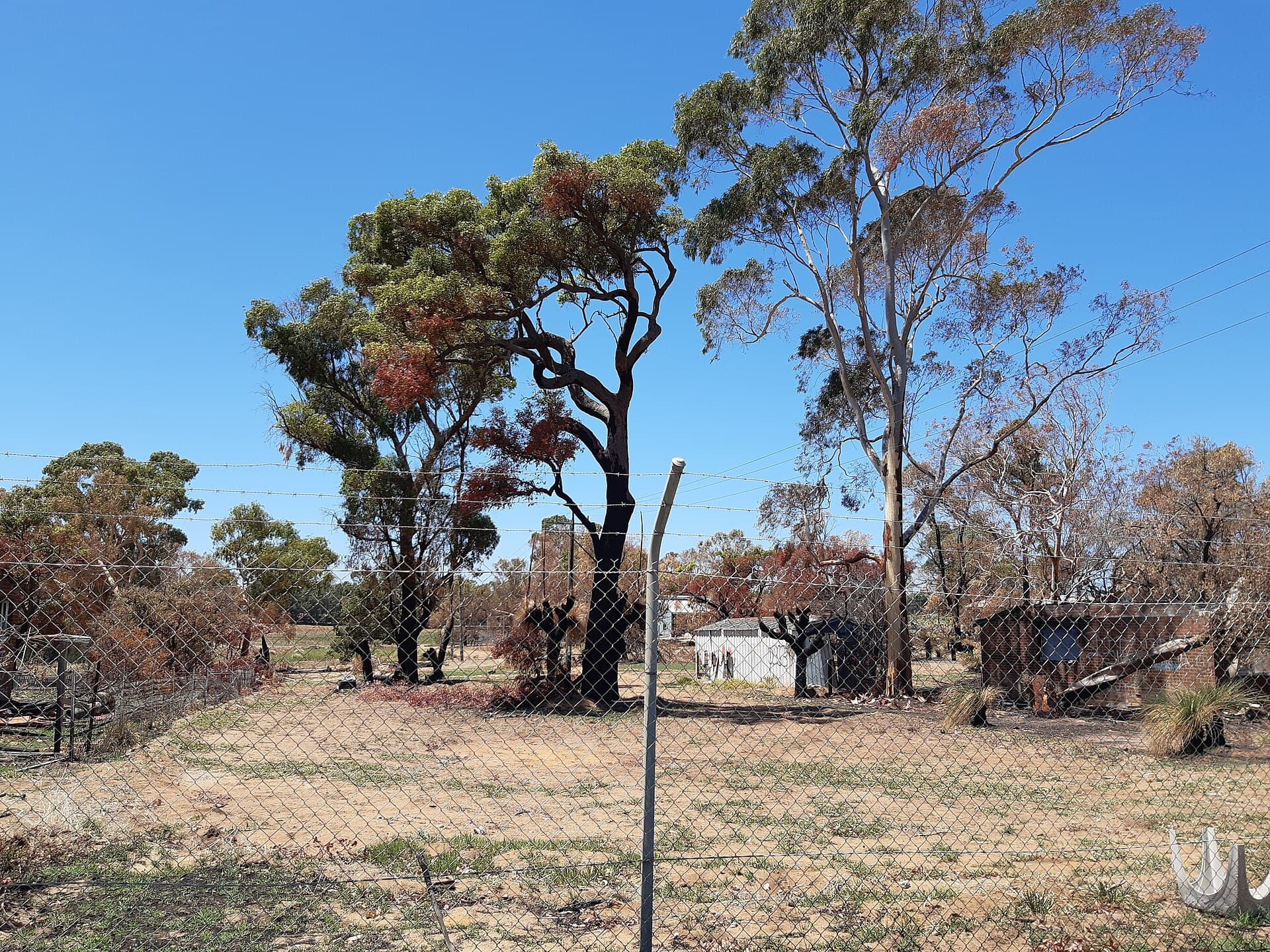
Photo: Calistemon · CC BY-SA 4.0 · Source · Image credits

A bushfire overlay is a planning fact with architectural consequences. Queensland has enough forested slope, enough dry springs, and enough urban-edge ambition that a custom home brief which never says “BAL” is incomplete. The photograph on this page is not Queensland, and it does not need to be. Ember attack is not a state patriot.
BAL means Bushfire Attack Level. It is a rated exposure to ember, heat and, at the top end, flame. The number changes materials, joints, decks, windows, doors and sometimes the shape of the house. It is assessed against a method and a map, not against your optimism about the creek.
Get the rating before you fall in love with weatherboards
Have a suitably qualified person assess the lot early — often as part of the town-planning or building-approval pack. The inputs include vegetation type, slope, and distance. A designer who sketches a timber undercroft and a palisade screen before that number exists is decorating.
If the lot is also steep, you now have two expensive geometries. Read sloping blocks next to this essay, not after the retaining walls are poured.
Council overlays and building approval both care. Approvals is the process piece. This one is the design piece.
What the rating does to a Queensland house
Queenslanders love a raised timber floor and a deep verandah. Fire loves an underside it can enter and a deck that collects leaves. Higher BALs push you toward enclosed or non-combustible undersides, tighter joints, rated windows, screens that are not pretty kindling, and roofs that do not hold ember beds.
That does not mean the house must look like a bunker. It means the romantic detail has to be rewritten in metal, in rated timber systems, or in a different geometry. A slab-on-ground house with a simple roof and a shaded masonry edge can still feel like a Queensland house if the plan and the outdoor room are good. See Queenslander architecture for the parts worth stealing when you cannot steal the stumps.
Windows are not just glass. Frames, seals, screens and how the window sits in the wall all change. A cheap upgrade later is rarely possible. Specify once.
Vegetation is not a styling extra
The assessment assumes a landscape. If you promise to keep a rainforest edge because that is why you bought the block, you may also be promising a higher rating. If you promise to clear, you must be allowed to clear, and you must live with the ethics and the erosion.
Do not play a two-handed game: selling the trees to yourself and selling the clearing to the assessor. Certifiers have seen it.
Water supply for firefighting, access for trucks, and a driveway that a vehicle can use on a bad day all wander into the brief on rural and semi-rural lots. They belong in the civil package with foundations and soil.
Cost and the honest conversation
BAL detailing is not a line you “value-manage” in week 20. It is structural to the envelope. If the budget cannot take it, the lot may be wrong, or the house is too ornate. A simpler plan on a fierce site is a custom decision, not a failure of taste.
Insurance is a separate, moving market. A rating and a construction method can affect premiums and willingness to cover. Ask an insurer questions before you lock the design, and do not treat their answer as eternal.
A ridge brief that works
Write: we will take the assessed BAL as a fact. We will not hide timber where the method forbids it. We will keep a usable outdoor room that is specified for the rating. We will manage leaves as a maintenance plan, not as a prayer.
Embers, gutters and the week you are away
Most houses that get into trouble are not standing in a flame front. They are collecting embers in a gutter, a valley, a deck crack, or a fibre door mat. Design for cleaning. A roof you cannot walk, a gutter you cannot reach, and a garden you will not rake are part of the rating whether the assessor wrote them down or not.
Water supply for firefighting on rural lots is a tank, a fitting and a way for a truck to stand. Do not hide the fitting behind a feature wall. Water tanks.
If you travel in spring, give a neighbour a key and a simple list. Custom homes burn while people are at the beach.
Decks, undersides and the Queenslander temptation
The raised timber edge is the state’s architectural gift and a BAL headache. You can keep a usable outdoor room with a non-combustible structure, a tighter soffit, and a pack-down furniture habit. You cannot keep an open, leafy, untreated underside and a high rating. Choose.
If the lot also wants a Queenslander silhouette, steal the roof and the verandah depth, not the lattice. Queenslander architecture.
Then hire a designer who has finished a house at or above your number. Walk that house. Look at the deck edge. That edge is the essay.
Insurance, access and the driveway that must work on a bad day
A BAL rating without a driveway a fire appliance can use is an incomplete brief on rural and semi-rural lots. Width, grade and a place to turn belong with the civil package. So does a water fitting that is not decorative.
Ask an insurer questions while the plan can still change. Construction type, vegetation and claims history move. Do not treat last year’s premium as a design approval.
Then keep the garden honest. A pretty screen of untreated timber against a bush edge is a rating argument you will lose twice: once with the assessor, once with the fire.
Treat the assessed rating as weather, not as an insult to the verandah you wanted. Rewrite the underside, the windows and the garden so the house can keep an outdoor room without keeping a fuel load. Then keep the gutters clean and the driveway usable. A BAL number without a maintenance personality is a certificate that will not be there on the afternoon the ridge fills with smoke and you are still two hours from home.
Frequently asked questions
- Does a BAL rating only apply in rural Queensland?
- No. Urban-edge and hinterland lots in south-east Queensland, and many regional fringes, sit in bushfire-prone mapping. Always check the overlay on the specific lot.
- Can landscaping lower my BAL after I build?
- Vegetation management can be part of an assessment, but you cannot plant your way out of a rating you ignored in the drawings. Do not invent a future clearing plan to justify today’s timber screen.
- Is BAL-40 a reason not to build?
- It is a reason to budget and to simplify the envelope. People build well at higher ratings. They do not do it with a catalogue of untreated timber decks.