Planning and approvals · James Nguyen · 5 min read
QBCC licences and home warranty insurance
The checks an owner should run before a deposit leaves the account — contractor licences, owner-builder permits, and what the Queensland Home Warranty Scheme actually covers.
Published 22 January 2024 · Updated 2 June 2026
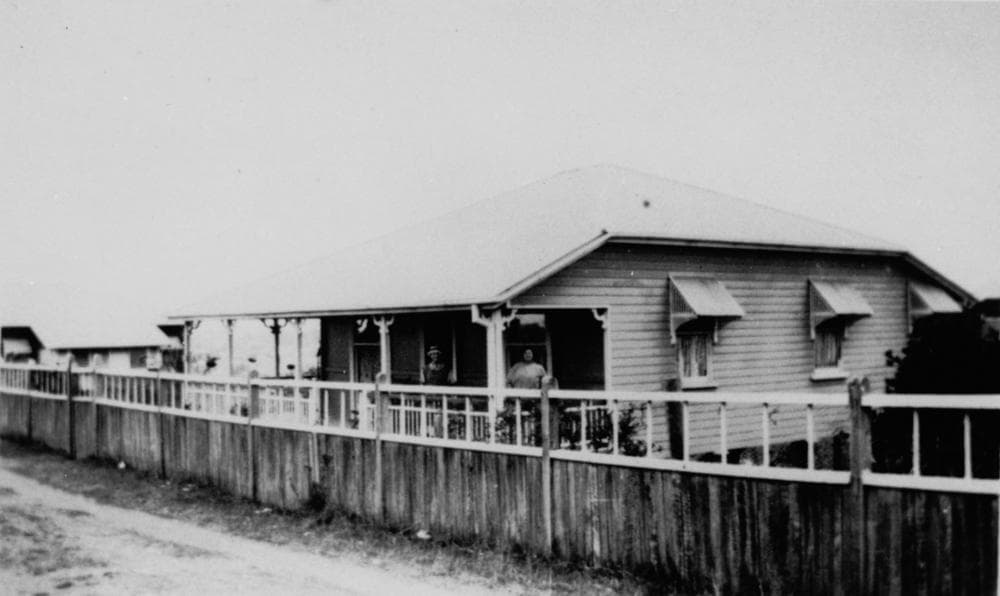
Photo: John Oxley Library, State Library of Queensland · Public domain · Source · Image credits

Queensland’s building regulator is not a vibe. The Queensland Building and Construction Commission sits between you and a very old problem: people taking money to build houses they are not allowed, or not able, to build. The historic Custom Homes QLD site asked owners to phone Jason and book the Aroona Street display. The modern equivalent is less romantic. Before you book anyone, you open the register.
This is not legal advice. Licence classes, insurance thresholds and policy wording change. Check the QBCC’s current public pages on the day you sign. The point of this essay is to tell you what to look for, and what owners still skip.
What a licence is for
A contractor licence says the person or company may carry out or supervise certain work. It is not a quality medal. It is a permission. Different classes cover different values and types of work. A licence that is fine for a bathroom is not automatically fine for a two-storey custom house on a slope.
Search the register for the legal name, not the trading name on the hat. Check directors if you are dealing with a new company that has an old salesperson. Check whether conditions or recent disciplinary notes exist. Then put that exact name on the building contract.
If friends suggest an unlicensed “supervisor” who will “organise the trades”, you are being invited to become the builder. That path has a name: owner-builder. It has a permit, a course, insurance consequences, and a disclosure when you later sell. It is not a casual saving.
Home warranty insurance, in plain words
For most residential contracts over a threshold, the Queensland Home Warranty Scheme is meant to help if the licensed contractor fails to complete the work or if certain defects appear. It is paid as part of the job, not as an optional extra you can charm your way out of.
It does not make a bad specification good. It does not cover every taste dispute. It does not run forever. It will not cheerfully fund a redesign because you changed your mind about the kitchen after the cabinets were made. Read the current cover, limits and time limits on the QBCC site, and keep the notice with the contract.
Owners get burned when they pay deposits that do not match the contract, when they start work before insurance is in place, or when they let a different entity issue invoices. If the company on the insurance notice is not the company building, stop.
Deposits, variations and the money trail
A custom home is a sequence of payments. The law and the contract both care about how large the first one is and what later claims are for. Keep a folder: licence extract, insurance notice, signed contract, specifications, and every variation with a price and a drawing.
Variations are where custom jobs go to die or get honest. A verbal “we’ll sort it” on site is not a variation. Project managing a custom build is the companion essay.
If a salesperson asks for a large holding deposit to “secure the team” before there is a contract, that is a story, not a process.
How this sits with certifiers and council
A licence does not replace a development approval or a building approval. The certifier is not your foreman. The council is not your interior designer. Council approvals and private certifiers explains the triangle.
Insurance and licensing also do not design the house for flood, fire or wind. Those sit in the drawings and the overlays: flood, BAL, cyclone.
A one-hour checklist before you pay anyone
Open the QBCC register and print the extract. Confirm the licence class covers your job. Ask for the insurance process in writing. Read the contract name against both. Call a solicitor if the number has more than one comma in it. Walk two finished houses. Ask the owners what happened when something went wrong.
Owner-builder dreams, and when they are not a saving
Queensland still lets a capable owner take the permit and the risk. The course and the paperwork exist because people used to skip both. If you are a registered tradesperson with time, a simple lot, and a stomach for procurement, the path can be clean. If you are a professional with a full-time job and a Pinterest file, you are buying a second job that will fight your first one.
Owner-builder work has sale-disclosure consequences. It also has insurance edges that are not the same as a licensed contractor’s job. Read the current QBCC material, not a forum post from 2017. Then price your time at something closer to reality than zero.
A hybrid — licensed builder for the structure, owner-supplied kitchens — creates interface fights. Write the interface or do not do it.
When something already feels wrong
If the supervisor’s company name keeps changing, if invoices arrive from a different ABN, if you are asked to pay a trade directly “to keep things moving”, or if the insurance notice never appears, stop. Money that leaves the contracted path is money the scheme may not follow.
Photograph the site weekly. Keep a paper file, not only a phone. The person who later has to reconstruct the job will thank you, and that person might be you.
The old Cairns testimonial praised a builder who kept going through rain and cyclones. That is character. Character is easier to enjoy when the paperwork would still stand up if the character left town.
After the job: when to use the scheme and when to use the contract
Defects have a path. Read the current time limits. Photograph, write, and give the builder a chance that is documented. The scheme is a safety net, not a first phone call for a squeaky door.
If the company has vanished, the net is why you checked the name on day one. That is the whole extra point, and it is enough.
Match the register, the contract, the invoices and the insurance notice to one legal name before a deposit leaves. Warranty cover is a net with edges, not a personality. If names start changing mid-job, stop. Character that keeps building through cyclones is easier to enjoy when the paperwork would still stand up if the character left town on a wet Tuesday with the keys.
Frequently asked questions
- Is a QBCC licence number on a ute enough?
- No. Check the public register for the exact name, the class of licence, conditions, and whether the licence is current. Match it to the name on the contract and the invoice.
- Does home warranty insurance cover every defect?
- No. It is a safety net with limits, timeframes and exclusions. It is not a substitute for a good contract, hold points and a builder who is still trading.
- Can I pay a big deposit to lock a start date?
- Be careful. Deposit caps exist for a reason. Money paid off-contract or in cash is money you may not see again if the job sours.