Planning and approvals · James Nguyen · 5 min read
Queensland building contracts explained
HIA and Master Builders forms, cost-plus temptations, prime-cost allowances, and the owner-builder mistakes that turn a custom home into a correspondence course.
Published 20 May 2024 · Updated 11 June 2026
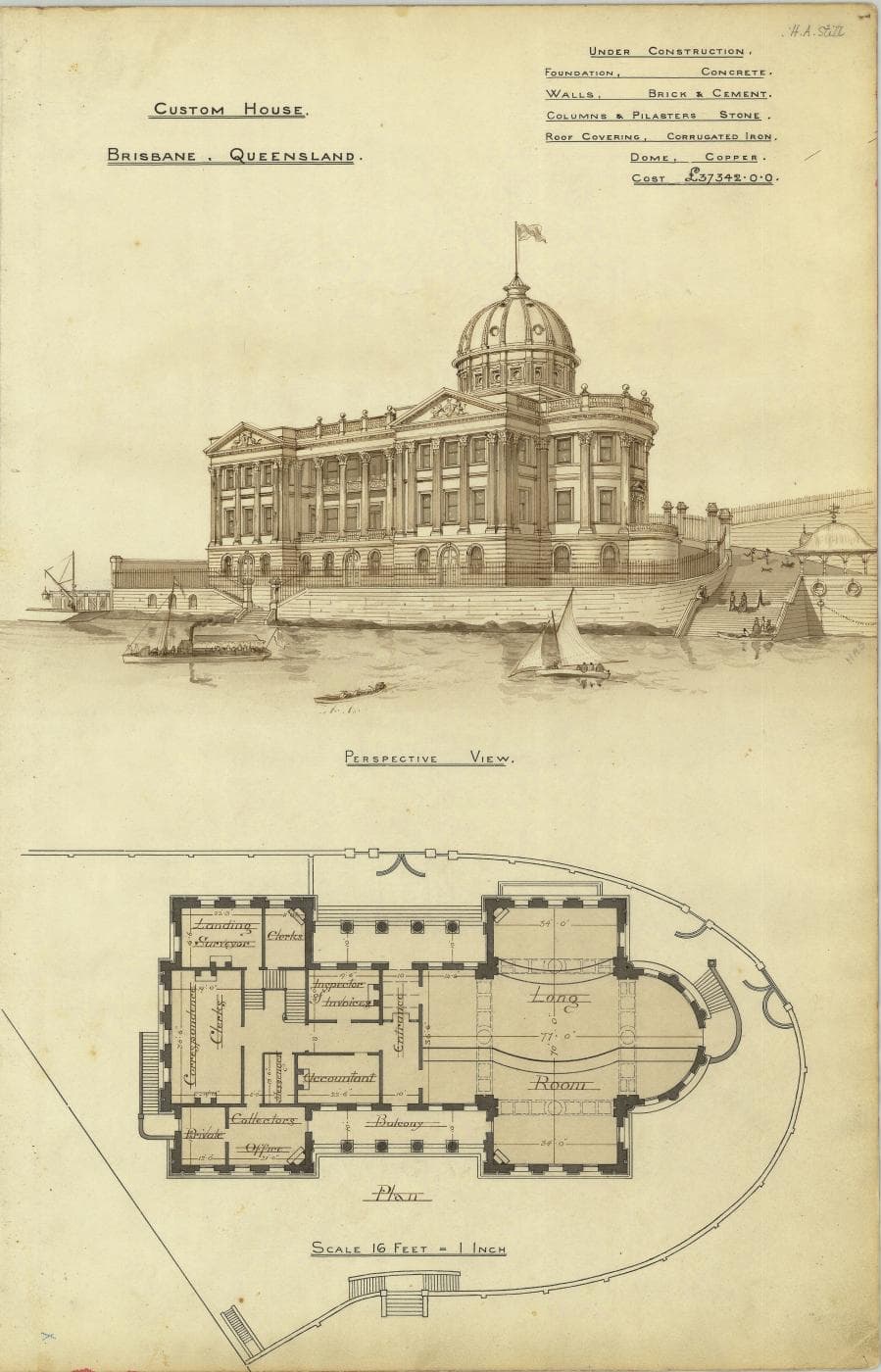
Photo: Queensland State Archives · CC BY 4.0 · Source · Image credits

A custom home is a pile of decisions that have not happened yet. The contract is how you agree who pays when those decisions become timber. Queensland has a Home Building regime that cares about deposits, progress, variations and cooling-off. Industry forms from HIA and Master Builders are common because they are familiar, not because they are automatically kind.
The old Custom Homes QLD site never showed a contract page. It showed a display home and a phone number. That was a sales sequence. This is the sequence after you have chosen someone.
This is not legal advice. Statute and form versions change. Pay a solicitor who sees Queensland residential contracts every week if the job is the largest cheque of your life.
Fixed price, allowances and the fiction of completeness
A fixed-price contract is only as fixed as the documents. If the drawing says “client to select tiles” and the allowance is a number from 2019, you do not have a fixed price. You have a hope.
Prime-cost and provisional-sum items should be listed, realistic, and tied to a specification. Ask how the builder will prove the actual cost and what margin applies. Then look at the cost guide and decide whether the allowance is a sales tool.
The more custom the house — a slope, a flood level, a one-off roof — the more the documents have to work. That is an argument for finishing design before you sign, which is the moral of architect or design-and-construct.
Cost-plus: a clean idea that needs a grown-up
Cost-plus can be honest on a renovation or a job with buried unknowns. It can also become an open tap. You need a definition of cost, a fee, an audit right, a reporting rhythm, and a willingness to stop work if the number runs.
If you cannot read a spreadsheet without shame, do not sign cost-plus because a builder said it would be “more flexible”. Flexibility is not a virtue when the school year starts in a house that is not there.
Variations are the job
Custom means change. The contract should say how a change is described, priced, and approved. “We’ll catch it up” is how relationships end. Project management is the field manual.
Do not sign a variation you do not understand because the pour is tomorrow. A one-day pause is cheaper than a permanent staircase you hate.
Who is on the paper
The licensed entity, the insurance notice and the invoice must tell the same story. QBCC and warranty insurance is the prequel. If a friendly supervisor is “doing it under someone else’s licence”, you are in a film that ends badly.
Owner-builder arrangements deserve a separate, sober conversation: permit, insurance, sale disclosure, and the fact that you are now the person trades will chase. It can be the right path for a skilled owner. It is not a personality.
Time, weather and the Far North clause
The old Cairns testimonial mentioned rain, cyclones, Christmas and Easter. Queensland contracts expect weather. They also expect a program. Read the extension-of-time clauses. Ask how wet days are recorded. On the coast, ask how a cyclone warning is treated. Cyclone-rated construction is not only a detailing issue; it is a calendar issue.
Liquidated damages and bonuses sound like leverage. They are only leverage if the start date, the definition of practical completion, and the exclusions are real.
A signing-week ritual
Print the drawings and the specification. Walk them with the builder. Highlight every “TBC”. Price the TBCs or delete them. Check the name, the licence, the insurance, the deposit. Sleep. Then sign.
Specifications that can be read on a wet Tuesday
The contract is only as good as the annexure that describes the house. A specification should name products, or name a performance and a way to judge a substitute. “Owner to choose” without a date is a delay machine. “Or equivalent” without a judge is a downgrade machine.
Attach the energy report, the soil report, the wind classification and the overlay notes so they are not folklore. If a page is not in the contract, it is a conversation, and conversations evaporate.
Paying, pausing and walking away
Progress claims should match visible stages. If you are asked to pay ahead because “the windows landed in China”, ask to see the windows or a trust arrangement you actually understand. Do not be rude. Do be dull.
If the relationship is already broken, a solicitor and the QBCC process are cheaper than another six months of hope. The QBCC essay is the companion, not a last resort.
A tropical, individual house still needs a boring document. The document is how the individuality survives first contact with a wet season and a price list.
Prime-cost honesty and the kitchen that was never in the price
If the tapware allowance would not buy the tap in the rendering, the price is a story. Reset allowances to real products or change the rendering. Do it before you sign, not after the tiler is booked.
The same honesty applies to air-conditioning, driveways and landscapes. If they are excluded, they still cost. Put them on a second page so you cannot pretend.
Cooling-off, deposits and the morning after
Use the cooling-off if the law gives you one and your stomach is not quiet. A custom home is too large for bravado. Check the deposit cap and the account it lands in. Then celebrate with something cheaper than a variation.
Who keeps the documents
You do. Cloud and paper. Drawings, specifications, insurance, variations, photographs. The builder will keep a version. You need the version you signed. Future you is a terrible archivist. Present you can still be a good one if the folder starts the week the deposit leaves, not the week the first argument arrives and nobody can find the clause that would have ended it.
A fixed price is only as fixed as the annexures. Reset allowances to real products, name how variations are priced, and keep the drawings you signed in two places. Use cooling-off if your stomach is not quiet. A tropical individual house still needs a boring document, because the document is how the individuality survives first contact with a price list and a month of rain.
Frequently asked questions
- Is a Master Builders contract safer than an HIA contract?
- Neither brand is a halo. Safety lives in the annexures: drawings, specification, allowances, and how variations are priced. Have someone who is not the salesperson read the form you are actually signing.
- When is cost-plus reasonable?
- When the scope cannot be defined and you can read a ledger. It is a poor default for a first custom home with a fixed life event, such as a lease ending.
- Can I write my own two-page contract?
- You can. You should not. Queensland has a statutory regime for home building contracts. A short letter will not charm it.