Climate and resilience · Tom Blackwell · 5 min read
Cyclone-rated homes for coastal Queensland
Wind regions, debris, roofs and the wet-season calendar — what a custom home on the Queensland coast must do besides look like a holiday.
Published 5 February 2024 · Updated 1 June 2026
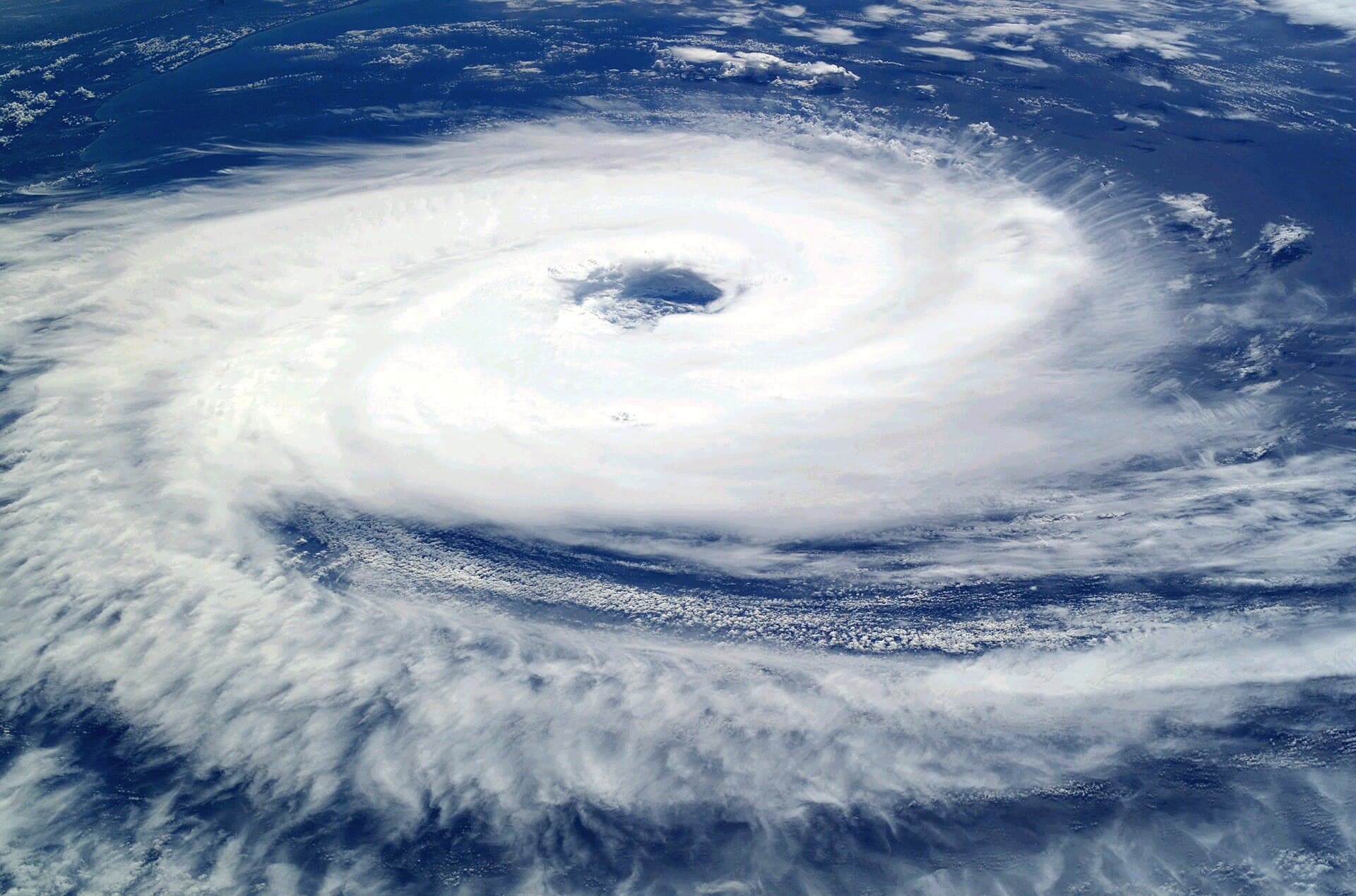
Photo: NASA / Earth Observations Laboratory, Johnson Space Center · Public domain · Source · Image credits

The archived Custom Homes QLD testimonial mentioned cyclones the way other states mention traffic: a delay you plan around, and a test of the builder. On the Queensland coast a cyclone is also a design load. Roofs fly, debris becomes a projectile, rain arrives horizontally, and a house that was a holiday photograph becomes a shelter.
Wind classifications and the National Construction Code details change. Your engineer and certifier will use the current maps and methods. This essay is about the owner habits that keep a coastal custom home honest.
Treat the roof as the building
Most failures that owners remember are roof and opening failures. The colour of the tin is not the system. Battens, screws, spans, edges, and how the roof ties to the walls are the system. Cladding and roofing.
Keep the roof simple if you can. Every valley and decorative pop-up is a chance for water and wind to negotiate without you. Gutters need overflows. A blocked box gutter in a tropical cell is an indoor waterfall.
Solar arrays, satellite dishes and the outdoor kitchen roof are part of the same conversation. They are not weekend add-ons after practical completion.
Openings, debris and the things you love
Windows and doors in a cyclone region are rated objects. Screens, shutters, and the decision to have a wall of glass on the east are money and risk. A view of the Coral Sea is a privilege you pay for twice: once in glass, once in the engineering.
Outdoor rooms must be designed for wind, not only for dusk. What you store under a deck becomes debris. Indoor-outdoor living.
Fences, sheds and water tanks fail in boring ways that then damage the expensive house. Strap the tanks. Water.
The plan is a wind story
A high-set house catches more load and needs more hold-down. That does not make it wrong; it makes it a foundation and engineering problem. A complicated plan with many corners can be a wind collection.
Garage doors are famous weak points. Specify them. Do not inherit a bargain door from a temperate catalogue.
Calendar and contract
A warning that sits over Cairns for three days is not a variation in the emotional sense; it may be an extension in the legal sense. Write the weather clauses so you understand them. Contracts, project management.
Do not pressure a builder to sheet a roof because your lease ends on a day the Bureau is watching. The old testimonial’s gratitude was about a team that kept going and stayed standing.
Insurance and the story you tell
Insurers have their own weather. Construction type, location and claims history move faster than your floor plan. Ask questions before you lock a glass wall, and do not treat a broker’s smile as engineering.
A coastal brief
Write: simple roof, rated openings, tanks strapped, outdoor room specified for wind, and no decorative holes in the envelope. Then hire people who have handed over houses after a bad summer.
What you do in the twelve hours before a warning
A rated house still needs a household plan: where the bins go, what comes off the verandah, how the tank overflow is clear, who has the shutters, and which room you sit in if you stay. Practice it once. Custom joinery that becomes a projectile is an owner failure, not a code failure.
After the wind, photograph everything before you tidy. Insurers like dates. So do builders who might still be in defects.
Neighbours, debris and the shared lot line
Your beautiful gravel, their trampoline; your boat, their roofing iron. Talk about loose objects as a street, not as a lawsuit waiting for a name. A custom home does not exempt you from being a neighbour.
On small coastal lots, the gap between houses is a wind tunnel and a debris lane. Screens and plantings have structural opinions.
The Far North studio that named this domain existed because coastal houses are a craft. Keep the craft. The holiday will still be there on a still day.
Roofs, solar and the things we bolt on later
A cyclone-rated house can be undone by a later pergola, a cheap garage door or an unengineered solar rail. Write a rule for the household: no new holes in the envelope without someone who understands the wind region.
Insurance may ask questions about those later objects. So should you. The first design is not the last chance to fail.
Keep a folder of engineering certificates with the house, not in an email you will lose. The next owner, or the next claim, will need them.
Openings schedule: the unglamorous table that saves roofs
Ask for a window and door schedule that names ratings, fixings and who supplies the installers. A pretty elevation that does not match that table is a claim waiting for wind. Keep the table with the engineering. Update it when someone “finds a cheaper slider”.
Debris from your own garden
The objects that break coastal houses are often the owner’s: pots, timber furniture, a boat not tied, a trampoline. Design storage that makes the right behaviour easy. A rated envelope with a loose yard is a half-built idea. Walk the yard when the warning is still a watch. Keep a printed openings schedule in the kitchen drawer with the insurance policy. When a later salesperson offers a prettier door, you will have something to compare besides a feeling. Coastal houses are lost in those later doors more often than in the first engineering certificate. After the first warning that does not hit, still walk the yard. Practice is cheaper than a claim, and the next warning will not book an appointment that suits the kitchen installer.
A rated envelope still needs a household plan: what comes off the verandah, what is strapped, which door you sit behind. Keep the openings schedule in a drawer and refuse later cheap sliders. Coastal houses are lost in add-ons and loose yards as often as in first-principles engineering. Practice on a warning that does not hit. The next one will not wait for your kitchen installer to finish the splashback.
Frequently asked questions
- Does cyclone rating mean the house will be untouched?
- No. It means the structure is designed for a defined wind event and debris load. Gardens, fences, boats and the neighbour’s trampoline are still in the plot.
- Is Far North Queensland the only place this matters?
- The most severe coastal wind regions are famous for a reason, but the Queensland coast more broadly still designs for wind. Check the region for the lot, not the marketing.
- Can I add a pretty roof lantern later?
- Not casually. Openings and extra roof bits are structural decisions. Design them in, or enjoy a simple roof.