Planning and approvals · James Nguyen · 5 min read
Building on flood-prone land in Queensland
Overlays, floor levels, materials that can take a bath, and the difference between a raised house and a house that will still be a house after the water leaves.
Published 8 January 2024 · Updated 2 April 2026
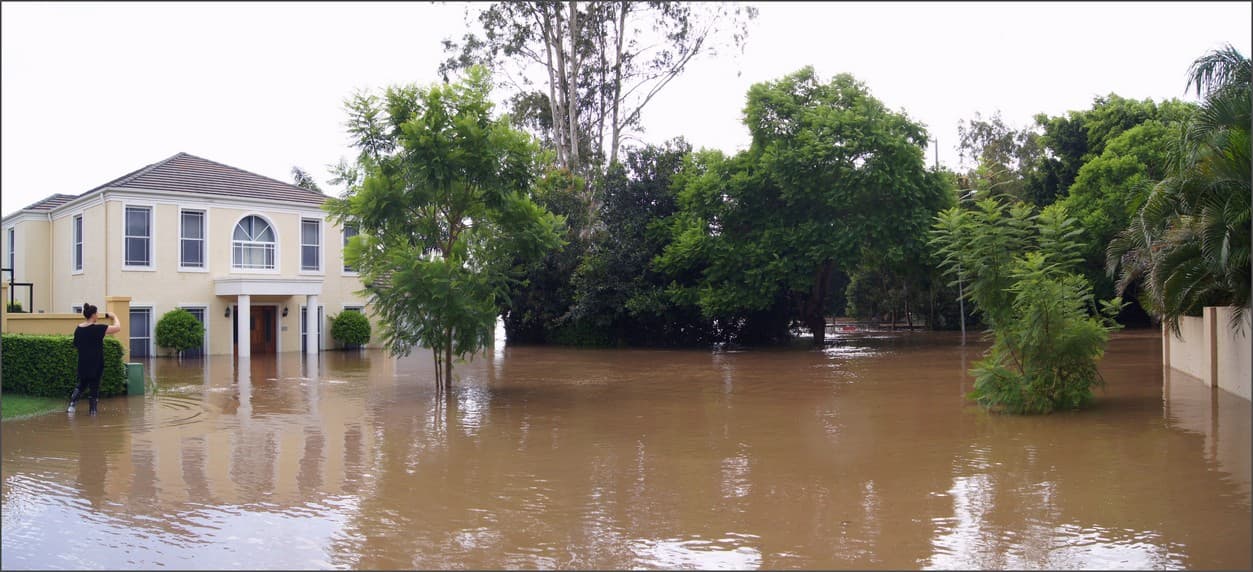
Photo: Tatiana Gerus · CC BY-SA 2.0 · Source · Image credits

Queensland floods in cities, in regional towns, and in places that marketed themselves as ridges until the creek remembered. The 2011 Brisbane and Ipswich photographs on this site are not history lessons for other people. They are a design constraint. Townsville’s 2010 street water is the same lesson in a different catchment.
A custom home on mapped land can be a sane choice. A custom home that treats the overlay as a planning inconvenience and then puts a rumpus room, a kitchenette and a family archive at ground level is a short story with a wet ending.
Read the overlay like an adult
Council flood mapping, overland-flow paths and sometimes storm-tide mapping will tell you a version of the risk. The version is only as good as the model and the date. Buy the lot with the map in the contract conversation. If you already own it, get the current level advice before the sketch design.
Building approval will ask for a floor level. That number is not a style. It changes stairs, disabled access, the look from the street, and how you arrive with groceries. Approvals is the process. This essay is the architecture of the number.
If the same lot is steep, you are now stacking flood and contour. Sloping blocks applies. If it is also coastal, storm tide and cyclone join the meeting.
Raise, but decide what you are raising
A high-set Queenslander keeps living spaces up and accepts that the undercroft will get wet. That only works if the undercroft is designed to get wet: flow-through, sacrificial finishes, services above a chosen line, no particleboard kitchen in the “temporary” granny flat. See Queenslander architecture and secondary dwellings.
A filled pad can put the house above a level and change the neighbour’s water. Fill is a civil and sometimes a planning act, not a weekend with a bobcat. Expect questions.
A two-storey house with a “garage and storage” ground floor is the common urban answer. Storage is where people put the things they cannot replace. Design cabinets and power as if water will visit. If you cannot bear that thought, the lot is wrong.
Materials, services and the week after
Tiles, sealed concrete, metal, and some closed-cell systems dry and clean more honestly than carpet, MDF and plaster at the low line. Electrical boards, hot-water systems and the nice boiler you were talked into should sit high. Tanks can float if they are empty and not strapped; water and stormwater is part of flood design too.
Driveways and evacuation matter. A beautiful house you cannot leave, or cannot return to, is a shelter with a mortgage.
Insurance is its own weather system. Ask questions before you commit to a design that an insurer will later call a hobby.
Contracts and the temptation to start
Earthworks on a flood lot are not the place for a handshake and a keen excavator. The QBCC and contract essays exist because water disputes are bitter.
The old Cairns testimonial mentioned rain and cyclones as delays, not as design. That is the owner’s voice after a good builder. On a flood lot you want that voice and a drawing that assumed the water.
A brief that respects the creek
Write the known level on the first page of the brief. Write what may get wet and what must not. Write that the undercroft is not a future bedroom. Then design a house you would still want to come home to after a week of mud.
What to store, and what to let go
The week after a flood is a furniture story. Design ground-level cupboards as if they will be hosed. Keep archives, photographs and the good guitar on the living floor. If you cannot bear that discipline, you will move those objects into the “dry” garage and lose them anyway.
Cars are the other archive. A driveway that becomes a trap is a design failure. Know the road you leave on, and whether that road is also mapped.
Insurance photographs of the house before the wet season are a chore that pays. So is a simple list of serial numbers.
Community, levees and the false comfort of someone else’s wall
A new levee, a neighbour’s fill, or a council project can change water. It can also fail. Do not buy a lot because a brochure said the problem had been solved. Buy it because you can live with the residual.
Talk to people who stayed in 2011 or 2022, not only to people who sold. The voice is different.
Queensland will keep raining on the people who can least afford surprise. Custom work, if it means anything, means fewer surprises.
Evacuation, power and the week you are not at home
Know the road out, the neighbour who has a boat, and whether the local school is a refuge or another low point. A custom house with a generator on the living floor and a charging plan for phones is not doomsday theatre in this state. It is Tuesday in a bad year.
If you travel, give someone a key and a list: what to lift, what to turn off, which gate sticks. Design ground-level rooms so a helper can hose them without destroying joinery. The architecture of recovery is part of the architecture of the house.
Materials at the wet line, listed without romance
Use closed-cell or mineral linings, tile or sealed concrete, metal or solid timber that can be cleaned, and cabinets that can be unscrewed. Avoid particleboard kitchens, carpet, and plaster that will sag. Services come in high. The list is dull on purpose. Dull lists survive floods.
If you cannot name the floor level, the wet-line materials and the road you leave on, you are not ready to pour. Write those three facts on the first page of the brief and keep them there when someone suggests a rumpus kitchen downstairs. Queensland water is not a metaphor. It is a design load, a storage rule and a week of mud that a custom house should have been told about before it learned the shape of the sofa.
Frequently asked questions
- If council issues an approval, is the lot safe?
- Approval means the proposal met the scheme rules it was assessed against. It is not a promise the next flood will be polite. You still own residual risk, insurance and how you store your life downstairs.
- Are Queenslanders automatically flood-smart?
- Raising the living floor helps people and some contents. It does not make stairs, tanks, cars or the structure magically immune. Debris and fast water are not theoretical.
- Should I buy a cheaper flood-mapped block and “just build up”?
- Price the floor level, the structure, the driveway, the insurance and the week you cannot live there. Cheap land is often expensive housing.