Living and outdoor · Samira Holt · 5 min read
Granny flats and secondary dwellings in Queensland
Planning definitions, flood and fire traps, and how to add a second household to a custom block without inventing a dispute.
Published 18 November 2024 · Updated 9 April 2026
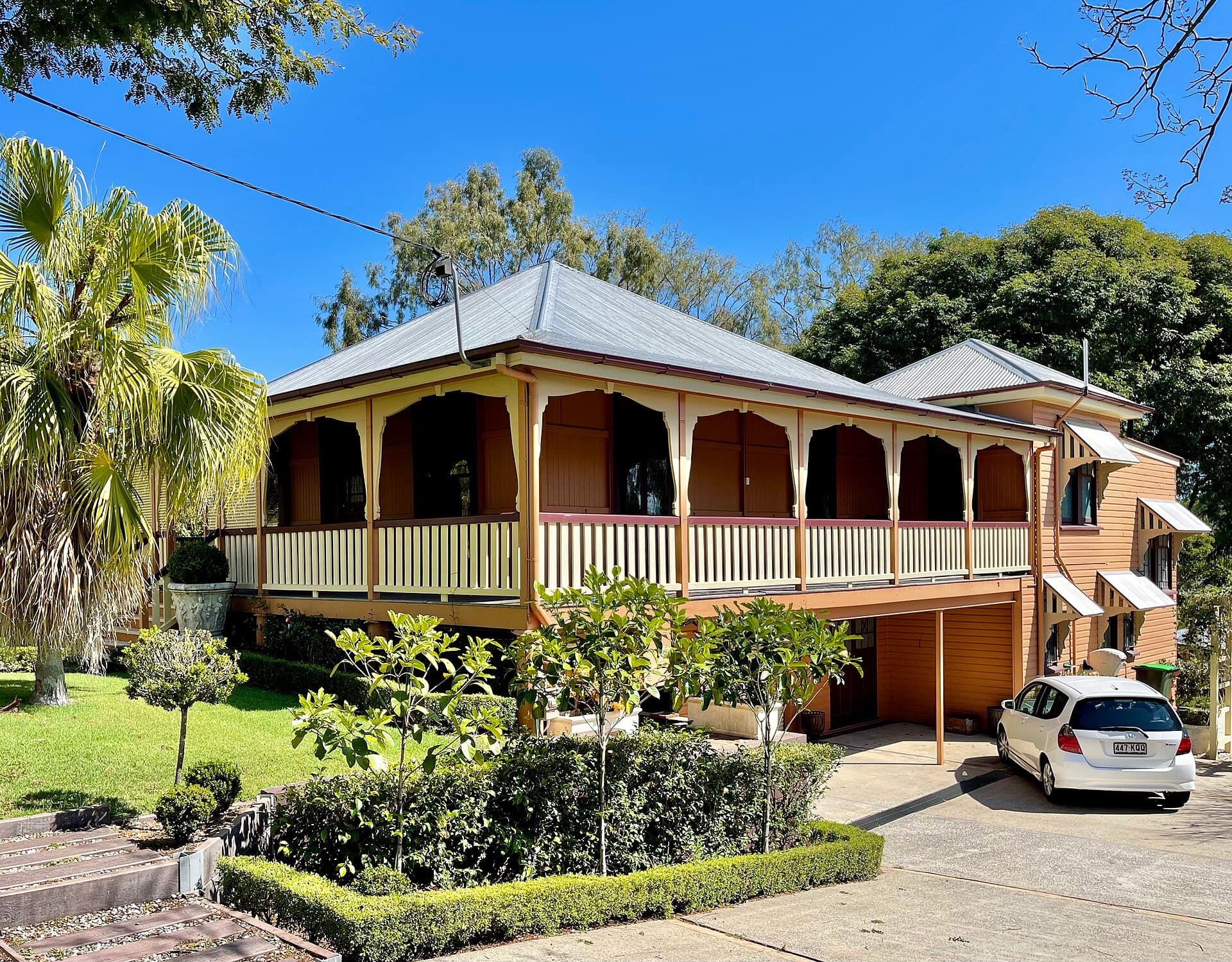
Photo: Kgbo · CC BY-SA 4.0 · Source · Image credits

Queenslanders have always found a way to put another life on the block: a sleep-out, a flat under the house, a room for a parent, a place for a child who came back. The modern language is secondary dwelling. The modern risk is assuming the planning scheme feels as casual as the family conversation.
This is not a substitute for a planner or a tax adviser. Definitions and sizes move. Read the scheme. Then design a small house, not a leftover.
Name the use honestly
A parent, a returning adult child, a carer, a paying tenant, a short-stay listing — these are different planning and insurance objects. If you tell council one story and Airbnb another, you are writing a future letter.
Parking, privacy, and whose backyard remains a backyard all change with the use. Open-plan and zoning applies between two households, not only inside one.
Overlays do not relax because the house is small
Flood-prone undercrofts are the classic bad granny flat. If water belongs there, people do not. Flood. BAL lots add a second envelope to detail. Bushfire. Small-lot character suburbs add neighbour tests. Brisbane.
A secondary dwelling still needs services, stormwater and a legal way to leave. Tanks and stormwater, approvals.
Design it as a house
Light, a place to sit outside that is not the bins, a bathroom that can take ageing, and a kitchen you would actually cook in. If the flat is for a parent, read accessibility first, not after the slab.
Shared walls and stacked wet areas need acoustic and waterproofing honesty. Wet areas.
On a slope, the “easy” undercroft can become a cave. Give it a courtyard or accept that you are building a motel room.
Contracts and the two-builder problem
If the flat is in the main contract, good — one licence, one program. If a second operator arrives later, you have two warranties and a garden between them. Write the interface.
Cost it as a house in the cost guide sense, not as a shed with a sink.
A family brief that prevents a feud
Write who pays the bills, who mows, who parks, whether the flat can be let, and what happens when the parent no longer wants the stairs. Then design to that document.
Services, meters and the fight about the bill
A second dwelling wants water, power and data that can be separately understood even if they are not separately metered. Decide who pays for air-conditioning in January. Write it down. Informal family arrangements last until the first shocking bill.
Hot water that runs through the main house at 6 am will make enemies. Give the flat a system, even a small one.
Bins and parking are planning objects and emotional ones. Draw two of each or admit they will share and fight.
Construction without wrecking the first house
If the main house is already finished, a second contract will cut the garden, the fence and the goodwill. Protect the existing waterproofing and stormwater. Do not let a new slab send water at an old footing. Foundations.
If both are built together, the cheaper move is usually one builder and one program, even if the flat finishes later.
The old Custom Homes QLD copy said the house should be as individual as you are. A block with two households needs two individualities and one set of manners.
Short-stay, tax and the story you tell council
If the flat will be let, say so in the brief and check the scheme. A secondary dwelling approved as a relative’s home is not automatically a tourist product. Neighbours notice. So do platforms.
Insurance and tax advice are separate professionals. This journal will not pretend otherwise. What we will say is that a kitchenette and a separate entry change the building and the relationship. Design both.
If the flat is for a parent, put ageing details in now: a shower without a hob, a path from car to door, a bedroom that is not a bunk. Retrofitting dignity is expensive.
Acoustic privacy between two Queensland households
A laundry under a bedroom, a deck beside a study, a shared wall with a television: these become feuds. Specify insulation, door seals, and a plan that does not stack wet areas over quiet rooms. Two households on one block need hotel manners and house budgets.
When the second household leaves
Design a flat that can return to a studio, a teenager, or a carer without another development fight if the scheme allows it. Avoid odd levels and one-use kitchens. A good secondary dwelling has a second life. That is the custom part: not the extra sink, the extra future. Write the future in the brief so the certifier and the family hear the same story, then put the same story in the contract so a later builder cannot invent a third one. Tell the certifier, the builder and the family the same use. A relative, a tenant and a short-stay guest are three buildings wearing one kitchenette. Queensland planning notices the difference even when a dinner table pretends not to. Write who parks, who mows and who pays the January power bill before you draw the second kitchen. Families remember drawings. They forget verbal fairness until the first shocking invoice arrives on a wet Tuesday. Put ageing details in the flat if a parent will use it: a hobless shower, a path from the car, a bedroom that is not a bunk. Dignity is cheaper in the first contract than in a later apology.
Name the use, check the scheme, and design a small house rather than a leftover. Flooded undercrofts are storage. Shared bills need writing down. Ageing details belong in the first shower if a parent will live there. Two households on one Queensland block need hotel manners and one set of drawings that the certifier, the builder and the family can all read without inventing a third story.
That is the brief. Keep it.
Frequently asked questions
- Is a granny flat always accepted development?
- No. Schemes differ on size, use, parking, overlays and whether someone must be related. Check the current planning scheme for the lot before you sketch a kitchenette.
- Can I put a flat in a Queenslander undercroft?
- Sometimes, if height, flood, fire separation, waterproofing and amenity work. An undercroft that floods is a storage story, not a bedroom story.
- Will a secondary dwelling pay for itself?
- Treat that as a separate, sceptical spreadsheet. Planning, tax, insurance and the wear of a second household are not a TikTok.