Living and outdoor · Samira Holt · 5 min read
Accessibility and ageing-in-place in a custom Queensland home
Ramps, showers, a room on the entry level and the Queensland problems of stairs, heat and long wet seasons — design the first house as if you might stay.
Published 2 December 2024 · Updated 3 June 2026
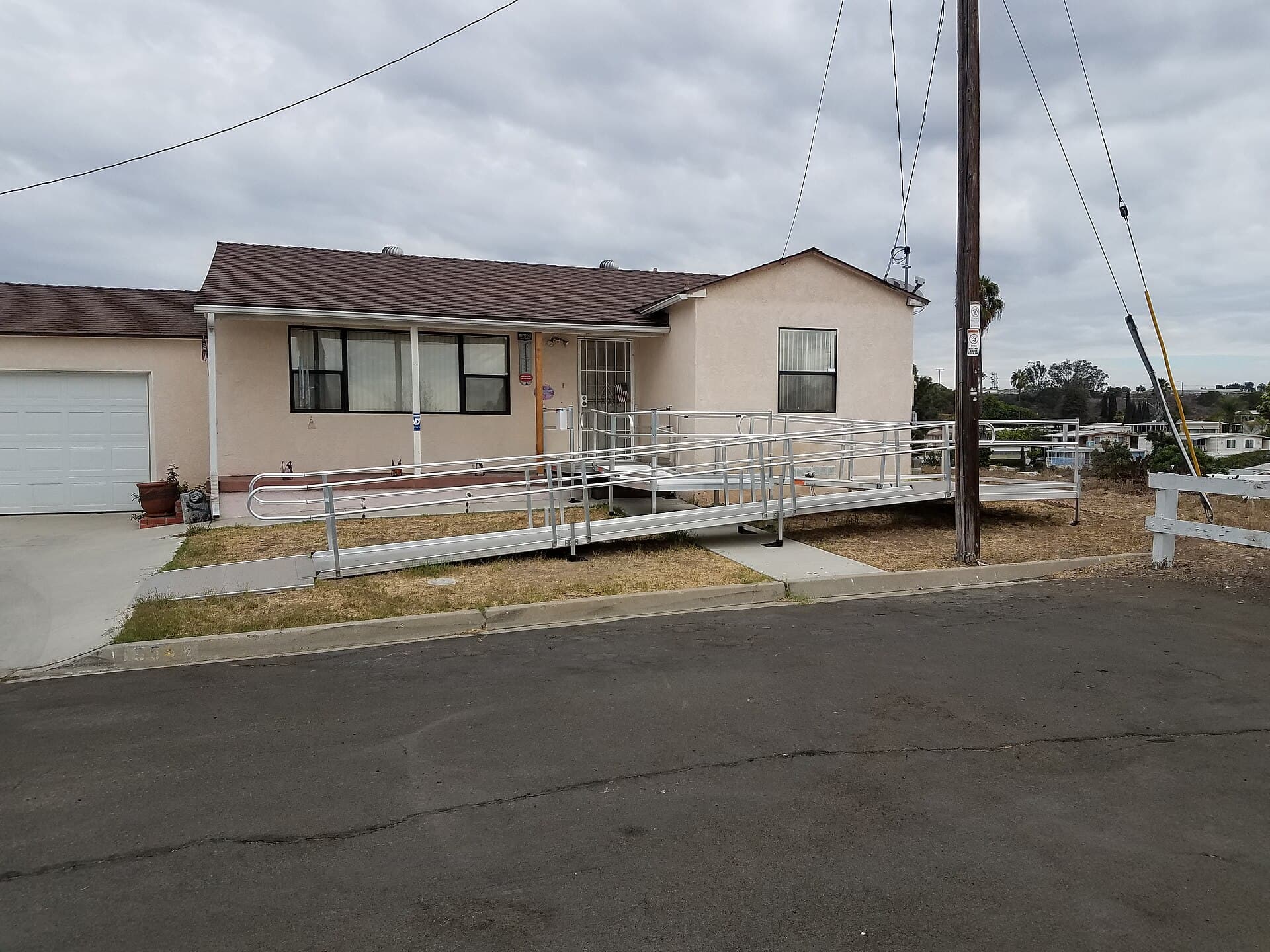
Photo: RightCowLeftCoast · CC BY-SA 4.0 · Source · Image credits

Queensland custom homes are good at outdoor life and often bad at staying. Stairs, sun, slippery tiles and a bedroom a storey away from the car are fine until they are not. Ageing in place is not a medical theme. It is a plan that assumes a knee, a pram, a guest with a frame, and a week in February when nobody wants to climb.
The original studio sold houses from economical to lavish. Lavish is useless if you cannot get in. This desk is about the first 20 metres and the wet rooms.
The arrival is the design
From the street to a toilet: that journey should be possible without a performance. A covered drop-off, a path that does not sheet with water, a threshold that a wheel can cross, and a door you can open with an armful. Indoor-outdoor thresholds and stormwater are part of accessibility.
On a slope this is expensive and worth it. Sloping blocks. A future lift void is cheaper than a later shaft. A room on the entry level that can become a bedroom is the most useful “spare” you will ever draw.
High-set Queenslanders need an honest conversation. Steal the shade, question the stairs. Queenslander architecture.
Bathrooms that do not wait for a fall
A step-free shower, reinforcement in walls where rails may go, a WC you can actually turn in, and a floor that is not fashionably lethal when wet. Do this in the main bathroom, not only in a “future” ensuite you will never renovate. Wet areas.
Heat and humidity make recovery harder. A cool, shaded bedroom with a fan is a health appliance. Passive cooling.
Gold Coast glass and Far North screens
Wide openings are lovely and heavy. Specify hardware a weaker hand can use. Screens and security should not turn the house into a trap. In a cyclone region, rated doors and a simple escape plan both matter. Cyclone homes.
If a secondary dwelling is the ageing plan, design it as a house now. Granny flats.
Standards, grants and humility
Livable Housing ideas, Australian Standards for access, and various rebate schemes exist and change. Use a designer who can name the target. Do not trust a brochure that says “aged friendly” because a tap has a lever.
Visit a house that has already been adapted. The plywood ramp on the lawn is the future you are trying not to have.
A brief that keeps everyone in the family
Write: one entry-level room that can take a bed, one bathroom that can take a change of body, a path from car to kettle that works in the rain. Then keep those lines when the kitchen wants the money.
Heat, recovery and the bedroom that works
A person who is unwell in a Queensland February needs a dark, fan-cooled room close to a bathroom and not on the western wall. That is a floor-plan decision, not a medical one. Put a jug point and a place for a chair. Leave space for a future bed rail.
Gardens should include a loop that is flat enough to walk on a bad day, with shade and a bench. The backyard as sport is fine. The backyard as only sport is a trap.
Visitors, prams and the house that stays generous
Ageing-in-place detailing makes a house kinder to everyone: a friend with a broken ankle, a child in a pram, a tradie with a fridge. Thresholds and a usable powder room on the entry level are hospitality.
Do not hide the accessible bathroom as a “disabled” cupboard. Make it the good bathroom. Pride is a design constraint.
Custom, in the old Cairns sense, meant the house fitted the people. People change. The house should have been told.
Queensland heat, stairs and the long wet week
A body that is recovering does not want a west-facing bedroom, a set of open-riser stairs without a second rail, or a path that becomes a creek in a tropical cell. Put the future quieter life on the cool side of the plan. Give the stair a landing that can take a chair. If the house is high-set because of flood or a view, admit that ageing-in-place may mean a ground-level suite or a later lift, and leave the structure ready.
Lighting at night should be even and reachable. A beautiful dark hallway is a fall. Switches at both ends of a run, a night path to the toilet, and a door handle you can work with wet hands are custom details with no Instagram value.
Respite for a carer matters as much as the ramp. A second sitting place, a shower that two people can use, and a way to get a meal without crossing the whole house will decide whether a family can stay.
Write these items into the first specification, then protect them when the kitchen wants another stone slab. The cheaper time to be kind is before the slab is poured.
Money, grants and the dignity of specifying once
Various state and federal programs sometimes contribute to access work. They change, they have paperwork, and they should not be the reason you leave a hob in the shower “for now”. Specify the good bathroom once. If a grant arrives, it is a bonus, not a design method.
An occupational therapist visit before the drawing freezes is a cheaper consultant than a demolition in year eight. Bring them to the site, not only to a plan.
A last walk-through question
Before you sign the drawing, walk from the parked car to a kettle and a toilet with a suitcase in your hand. If that walk fails, the house will fail someone you love. Fix the walk. Everything else is decoration.
A custom Queensland house that cannot take a pram, a frame or a bad knee is only custom for a season. Put the path, the bathroom and the entry-level room in the first contract, then refuse to trade them for stone. The people you are designing for include a future you have not met, and they will judge the house by the first twenty metres, not by the pendant light you argued over on a dry Saturday in June.
Frequently asked questions
- Do I have to build to a formal Livable Housing level?
- You should decide a target. Even if you do not certify a level, the habits — a step-free path, a better bathroom, wider doors — are cheaper in the first contract than in a later demolition.
- Are Queenslanders incompatible with ageing in place?
- High-set houses fight you on stairs. You can still plan a lift void, a ground-level suite, or a different house. Nostalgia is not a mobility aid.
- Is a ramp always ugly?
- Only when it is added in a panic. A designed ramp or a gentle landscape path can be the arrival. Hide it and you will get a metal afterthought.